How to Use a Nose Cleaner Safely

Complete step-by-step guide with safety tips, common mistakes to avoid, and expert recommendations for effective nasal irrigation using nose cleaner devices.

Updated By Nose Cleaner Team 12 min read

Table of Contents

1. Nose Cleaner Preparation & Safety

⚠️

Critical Nose Cleaner Safety Information

Always use sterile, distilled, or previously boiled water with your nose cleaner. Tap water can contain harmful bacteria that may cause serious infections, including rare but potentially fatal brain infections.

What You'll Need for Nose Cleaning

  • Nose cleaner device (Neti pot, squeeze bottle, or electric nasal irrigator)
  • Sterile or distilled water (never tap water)
  • Saline solution or salt packets
  • Clean towel
  • Clean, dry storage container

Water Safety

  • Use only sterile, distilled, or previously boiled water
  • If boiling water, let it cool to lukewarm (body temperature)
  • Never use tap water, even if filtered
  • Check expiration dates on saline packets

FDA Safety Guidelines

The U.S. Food and Drug Administration (FDA) provides specific guidelines for safe nasal irrigation:

  • Use only sterile, distilled, or previously boiled water
  • Clean your irrigation device after each use
  • Don't share irrigation devices with others
  • Consult your healthcare provider if you have chronic sinus problems
Read Full FDA Guidelines →

2. Step-by-Step Nose Cleaner Instructions

1

Prepare Your Nose Cleaner Saline Solution

Mix your saline solution according to the package instructions. For most nose cleaner devices, this means:

  • Add one saline packet to 8 ounces of sterile water
  • Stir until completely dissolved
  • Test temperature - it should be lukewarm (body temperature)
Pro Tip: If the solution feels too salty or burns, you may have used too much salt. Start over with the correct measurements.
2

Position Yourself Correctly

Stand over a sink and follow these positioning steps:

  • Lean forward at a 45-degree angle
  • Tilt your head sideways (not backward)
  • Keep your mouth open and breathe through your mouth
  • Position the device so it points toward the back of your head, not up
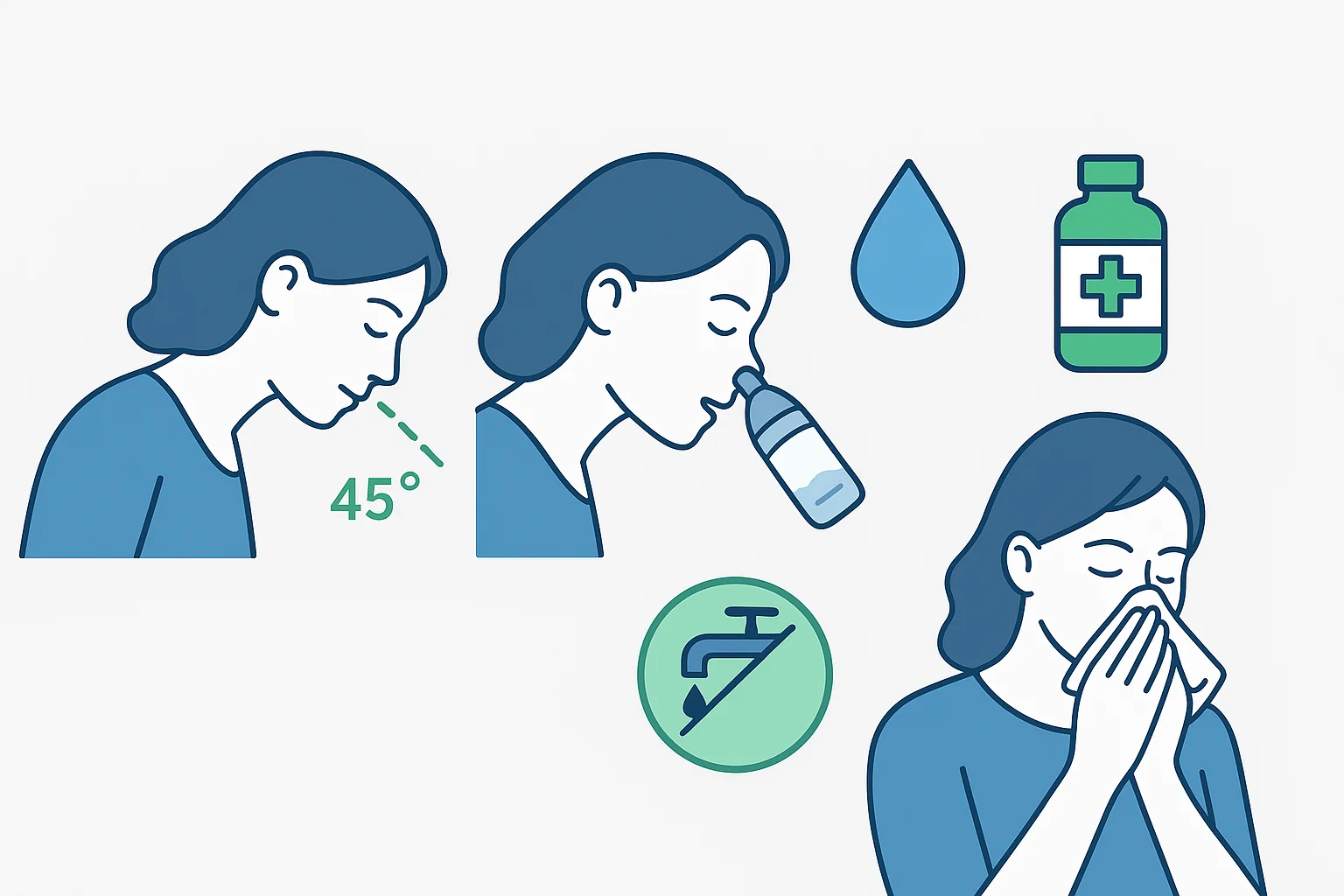
Correct positioning for nasal irrigation
3

Insert and Irrigate

Gently insert the device tip into your upper nostril:

  • Create a seal between the device and your nostril
  • Slowly pour or squeeze the solution
  • Let the solution flow through your nasal passages
  • It should come out through your other nostril
Important: If water goes down your throat, you're tilting your head too far back. Adjust your position.
4

Repeat for the Other Side

After irrigating one nostril:

  • Gently blow your nose to clear excess solution
  • Switch to the other side
  • Repeat the same process
  • Use fresh solution if needed
5

Clean Up and Store

Proper cleaning is essential for safety:

  • Gently blow your nose to clear remaining solution
  • Wash your device with soap and warm water
  • Rinse thoroughly and let air dry completely
  • Store in a clean, dry place

3. Common Mistakes to Avoid

Using Tap Water

Mistake: Using tap water or filtered water instead of sterile water.

Risk: Serious bacterial infections, including rare but potentially fatal brain infections.

Solution: Always use sterile, distilled, or previously boiled water.

Wrong Head Position

Mistake: Tilting head backward instead of sideways.

Risk: Solution goes down throat instead of through nasal passages.

Solution: Tilt head sideways and lean forward at 45 degrees.

Too Much Pressure

Mistake: Squeezing too hard or using too much pressure.

Risk: Discomfort, potential damage to nasal tissues, or ear problems.

Solution: Use gentle, steady pressure. Let gravity help the flow.

Not Cleaning Device

Mistake: Not cleaning the device properly after use.

Risk: Bacterial growth and potential infections.

Solution: Clean thoroughly after each use and let air dry completely.

Wrong Water Temperature

Mistake: Using water that's too hot or too cold.

Risk: Discomfort, potential burns, or reduced effectiveness.

Solution: Use lukewarm water (body temperature).

Sharing Devices

Mistake: Sharing nasal irrigation devices with family members.

Risk: Cross-contamination and potential infections.

Solution: Each person should have their own device.

4. Baby Nasal Irrigation

👶

Special Considerations for Babies

Nasal irrigation for babies requires extra care and gentleness. Always consult your pediatrician before starting nasal irrigation with infants.

For Babies Under 6 Months

  • Use only saline drops, not irrigation devices
  • Place 2-3 drops in each nostril
  • Use a bulb syringe to gently suction
  • Never use force or insert deeply

For Babies 6+ Months

  • Use a gentle nasal aspirator designed for babies
  • Apply saline drops first to loosen mucus
  • Use very gentle suction
  • Clean the device thoroughly after each use

Safety Tips for Babies

  • Never use tap water - only sterile saline
  • Don't irrigate if baby has ear infection
  • Stop if baby shows signs of distress
  • Consult pediatrician for chronic issues

5. Troubleshooting Common Issues

Water Goes Down My Throat

Problem: Solution flows down your throat instead of through your nose.

Solution: Adjust your head position - tilt more sideways and lean forward more. The device should point toward the back of your head, not upward.

Solution Won't Flow Through

Problem: Water doesn't come out the other nostril.

Solution: Check for nasal blockages, try a gentler approach, or consult your doctor if the problem persists.

It Burns or Stings

Problem: The saline solution causes discomfort.

Solution: Check your salt concentration - you may have used too much salt. Start over with the correct measurements.

Ear Pain or Pressure

Problem: You experience ear discomfort during irrigation.

Solution: Stop immediately and consult your doctor. This may indicate an ear infection or other issue.

Nose Bleeding

Problem: Minor bleeding occurs during irrigation.

Solution: Stop irrigation and apply gentle pressure. If bleeding continues, consult your doctor.

6. Frequently Asked Questions

How often should I use nasal irrigation?

Most people can safely use nasal irrigation once or twice daily. However, consult your doctor for personalized recommendations, especially if you have chronic sinus issues.

Can I use nasal irrigation if I have a cold?

Yes, nasal irrigation can help relieve cold symptoms by clearing mucus and reducing congestion. However, if you have a severe cold or sinus infection, consult your doctor first.

Is it safe to use nasal irrigation during pregnancy?

Nasal irrigation is generally safe during pregnancy, but always consult your healthcare provider first. Use only sterile water and follow all safety guidelines.

Can I make my own saline solution?

Yes, you can make saline solution by mixing 1/4 teaspoon of non-iodized salt with 8 ounces of sterile water. However, pre-mixed saline packets are more convenient and ensure proper concentration.

What's the best time of day to use nasal irrigation?

Many people find morning irrigation helpful for clearing overnight congestion. Others prefer evening irrigation before bed. Choose what works best for your schedule and symptoms.

Can nasal irrigation help with allergies?

Yes, nasal irrigation can help remove allergens from your nasal passages, potentially reducing allergy symptoms. However, it's not a substitute for proper allergy treatment.

When to See a Doctor

Consult your healthcare provider if you experience:

  • Persistent ear pain or pressure
  • Frequent nosebleeds
  • Severe headaches after irrigation
  • Signs of infection (fever, severe pain, discharge)
  • No improvement in symptoms after regular use